

Punkva Cave Boat Tour Essentials
Everything you need to know before boarding: water depth, boat types, lighting systems, and what to expect during your underground journey.
Understand the science behind Punkva Cave. How limestone dissolves, cave systems develop, and why the underground river flows year-round through these ancient passages.
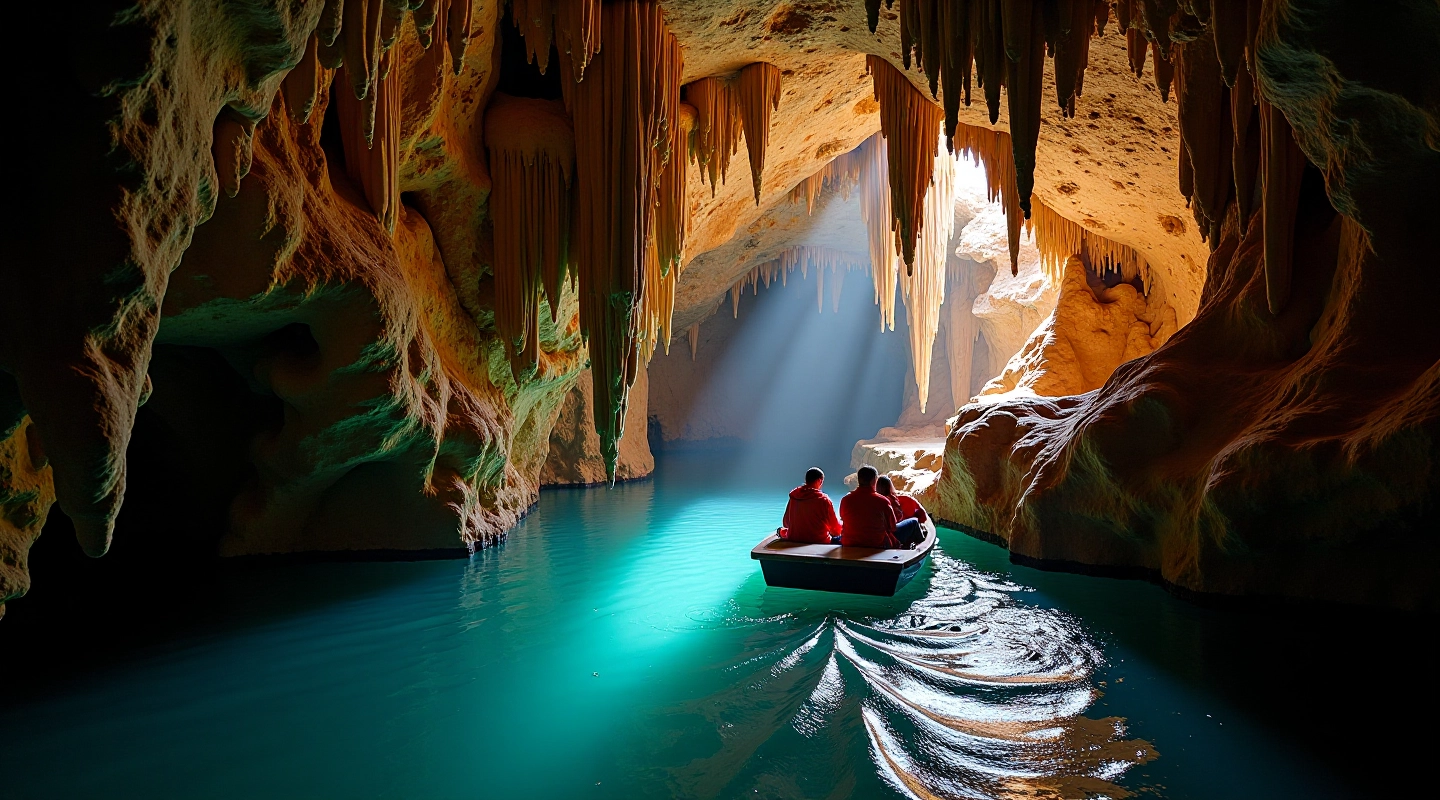
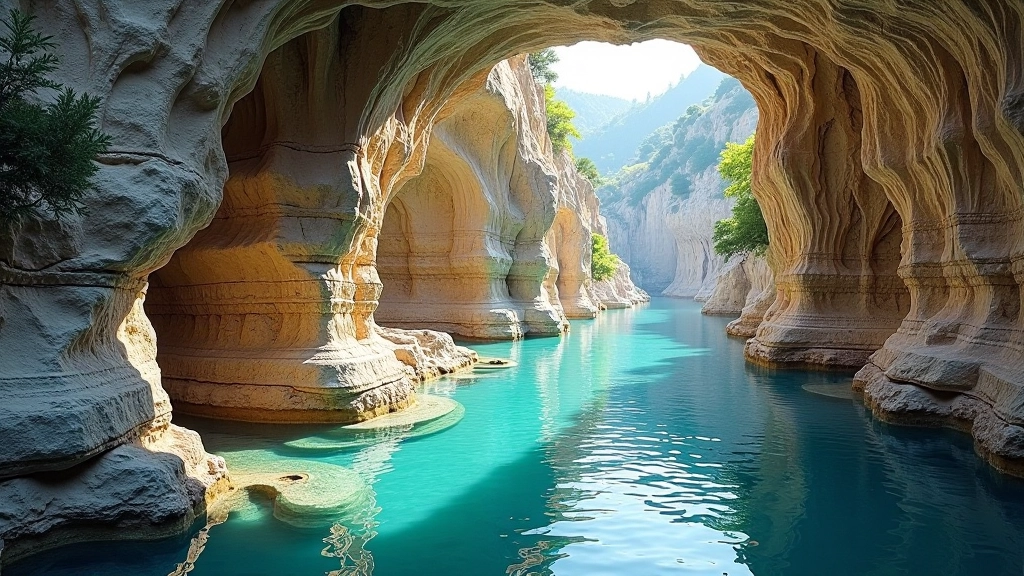
Caves don't just appear. They're sculpted over millennia by water working on soluble rock. Here's the real process: rainwater absorbs carbon dioxide from the atmosphere and soil, creating a weak carbonic acid. This acidic water seeps through cracks in limestone bedrock. Over thousands of years — we're talking 10,000 to 100,000 years or more — that water dissolves the limestone grain by grain.
The result? Hollow passages expand beneath the surface. Eventually, the cave chamber gets large enough that it can't support the ceiling anymore. Parts collapse, creating sinkholes like the famous Macocha Abyss (138 meters deep). The remaining passages become navigable caves — perfect for exploring, and in Punkva's case, for boat tours.
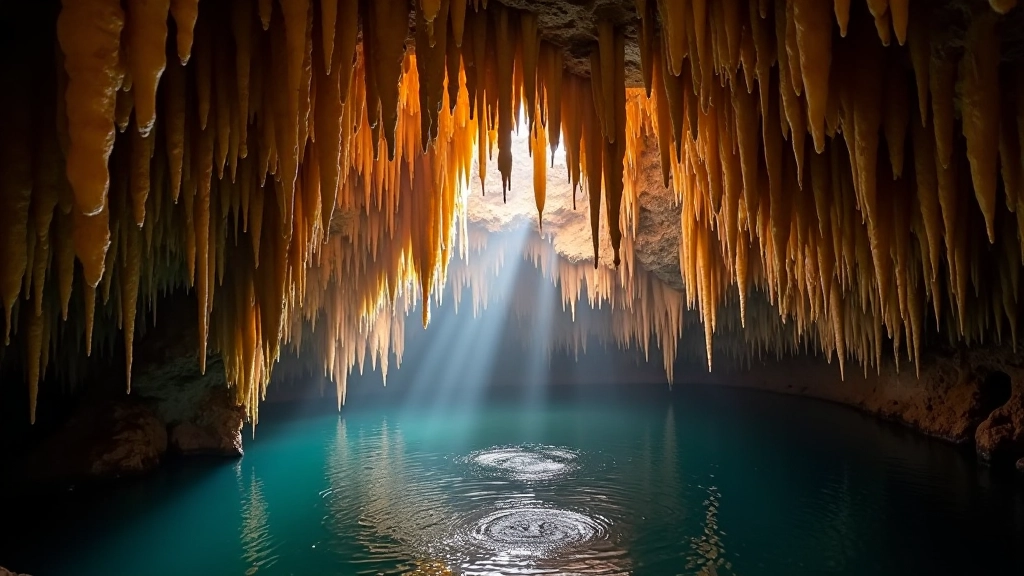
Once a cave opens up, something else happens. Mineral-rich water continues to drip from the ceiling. Each drop leaves behind a tiny trace of limestone. Drop after drop. Year after year. Century after century. Eventually, you've got stalactites — those hanging formations that grow downward from the cave ceiling.
Stalagmites build upward from the floor where water drops land. The difference? Stalactites have a 'c' for ceiling. Stalagmites have an 'm' for middle (or ground). They grow slowly — we're talking a few millimeters per decade in most caves. That stalactite you're looking at on your tour? It might be 5,000 years old. The formations you'll see in Punkva Cave are genuine geological artworks.
"Every formation you see represents thousands of years of mineral deposition. One drip at a time, nature built these sculptures."
This article presents general geological information about cave formation and underground river systems. Specific details about Punkva Cave's geology may vary. For detailed scientific information, consult published geological surveys or speak with your cave tour guide, who can explain local formations based on current research.
Here's where it gets interesting. The water that carved the cave doesn't just disappear. It keeps flowing. In Punkva Cave, the underground river runs year-round, following paths it's cut through the limestone for millennia. The water comes from multiple sources — rainfall that seeps through surface layers, groundwater from surrounding areas, and underground streams that predate the cave itself.
The river you'll travel on during your boat tour isn't some underground lake. It's moving water with purpose. The current varies seasonally. In spring (April-May), snowmelt from higher elevations increases flow significantly. Summer sees moderate flow. Winter drops it to minimum levels. Yet it flows constantly, year after year, continuing its geological work by further dissolving limestone walls and deepening its channel.
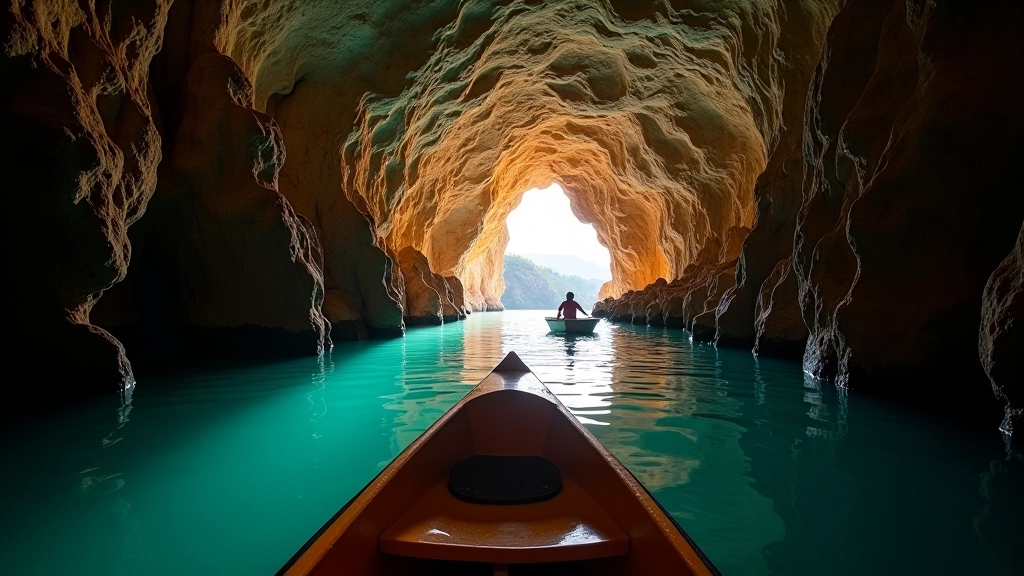
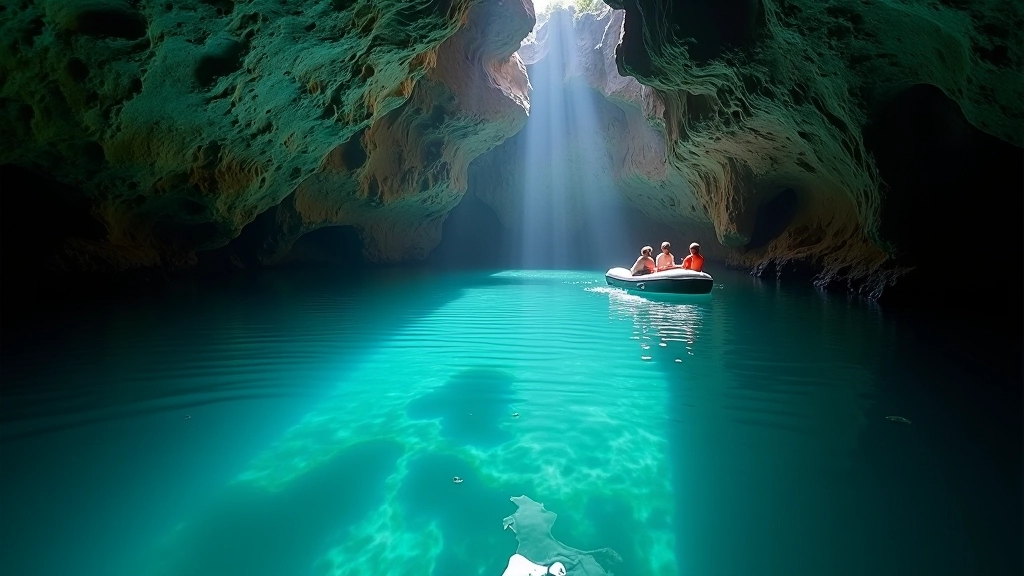
The water flowing through Punkva Cave isn't plain H2O. It's slightly acidic and mineral-rich from its journey through soil and limestone. That's why it continues dissolving limestone — the process that carved the cave keeps happening. You'll notice the water's clarity varies. During heavy rainfall, it becomes more turbid (cloudy) from increased sediment. In dry periods, it runs clear enough to see the bottom in shallow sections.
The cave environment itself is stable — consistently cool (around 9-10 degrees Celsius year-round) and humid. There's no direct sunlight, so you won't find typical plant life inside. But there are specialized organisms adapted to cave life: blind fish, cave-adapted crustaceans, and bacteria that thrive in total darkness. It's a complete ecosystem that's existed in isolation for thousands of years.
When you take a boat tour through Punkva Cave, you're not just seeing a pretty cavern. You're witnessing geological time made visible. Those stalactites? Thousands of years of mineral accumulation. The cave walls? Sculpted by water over tens of thousands of years. The river beneath your boat? Still working, still dissolving limestone, still deepening the passage. Every formation you see represents an incomprehensible amount of time and a patient geological process. That's what makes cave geology so compelling — it shows you deep time in a way that's actually tangible. You can touch it, float on it, and stand inside it.
Discover practical guides and insights for your underground adventure
Everything you need to know before boarding: water depth, boat types, lighting systems, and what to expect during your underground journey.
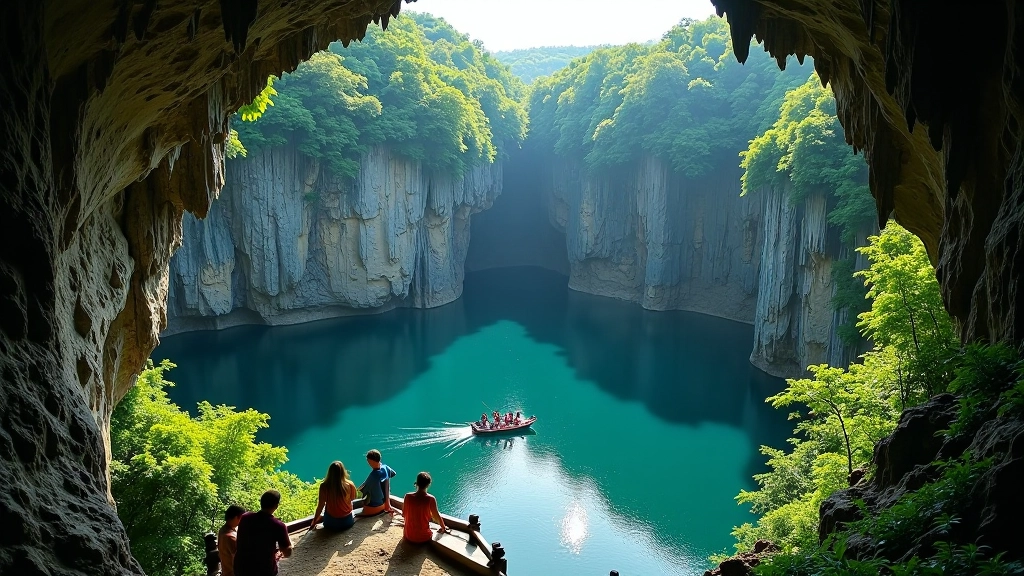
A 138-meter sinkhole that'll take your breath away. This guide covers the viewing platforms, walking routes, photography tips, and how the abyss connects to the cave system.
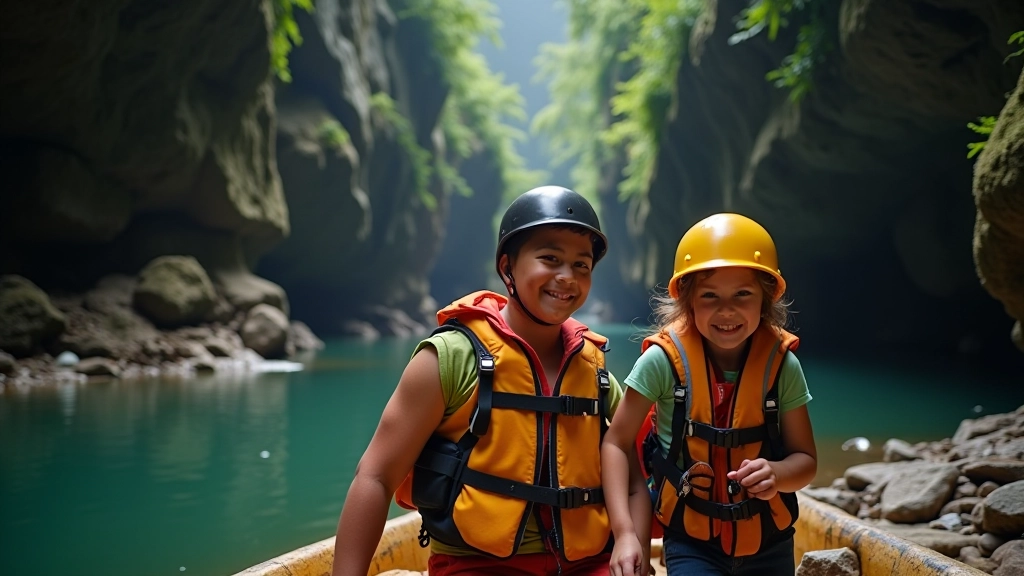
Tips for bringing kids on underground boat rides. Age recommendations, keeping children engaged, physical requirements, and how to prepare for the experience.